Skip to content
Home » Blog » Eurovision Song Contest Final

Eurovision Song Contest Final

All dates are in the past.

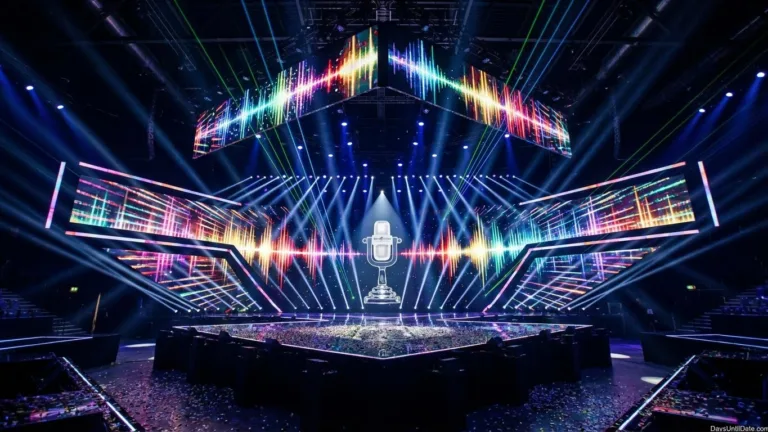
Eurovision Song Contest Final night is the point where months of national selections, rehearsal clips, fan rankings, and living-room guesses turn into one live result. For 2026, the Grand Final is scheduled for Saturday, May 16, 2026, at Vienna’s Wiener Stadthalle, with the broadcast starting at 21:00 CEST. That time matters. In London it is 20:00, in Istanbul it is 22:00, and in New York it lands in the afternoon. A proper global watch, then, even when the trophy is handed out in Austria.

Core Details for the Final

2026 Final DateSaturday, May 16, 2026
Host CityVienna, Austria
VenueWiener Stadthalle
Live Broadcast Time21:00 CEST
Planned Finalists25 entries for Vienna 2026: 20 Semi-Final qualifiers plus 5 pre-qualified entries
Main Voting MethodNational juries, audience voting, and a Rest of the World online vote
Recent Audience ContextThe 2025 Grand Final reached 166 million TV viewers across 37 markets

What the Final Actually Decides

The Final decides the winner of the Eurovision Song Contest, not just the most streamed song or the loudest fan favorite. Each entry arrives with its own national broadcaster behind it, but on Final night the contest becomes simpler: one song, one stage, one scoreboard. The winning song is the entry with the highest combined total from the public vote and national juries.

The night feels longer than a normal music show because it has two jobs at once. It must present every finalist in a clean, fair running order, then keep viewers watching through the voting window, jury announcements, public points, and the trophy handover. That is a lot of live television. Small delays happen. Camera cues matter. Even a ten-second pause can feel huge when millions are waiting for points.

Date, Venue, and Broadcast Details

The 2026 Grand Final takes place at Wiener Stadthalle, Austria’s largest indoor arena, after Austria won the 2025 contest in Basel with “Wasted Love” by JJ. Vienna is not new to the job. The city hosted Eurovision in 1967, again in 2015, and now returns for the 70th edition in 2026. A neat bit of history, tucked into a Saturday night show.

The live week follows the familiar May pattern: the First Semi-Final on Tuesday, the Second Semi-Final on Thursday, and the Grand Final on Saturday. Fans who only watch the Final will still get a full competition, but the Semi-Finals explain why certain songs arrive with early buzz while others feel like fresh discoveries.

For viewers outside Europe, the time can be the tricky part. The Final begins at 21:00 in Vienna, so it runs late in much of Europe and lands earlier across the Americas. In Australia, where Eurovision has had a strong broadcast following for years, many fans watch at odd hours or catch replays. That odd timing is part of the charm, really. Coffee helps.

How the Final Lineup Is Built

Eurovision does not place every participating country straight into the Final. Most countries must first compete in a Semi-Final. For Vienna 2026, 15 songs compete in each Semi-Final, and 10 songs from each show move on. Those 20 qualifiers then join the pre-qualified entries from Austria, France, Germany, Italy, and the United Kingdom.

Semi-Final Qualifiers

Twenty entries earn a Final place through the Semi-Finals. They arrive with the useful advantage of already having performed live during Eurovision week.

Pre-Qualified Entries

The host country and several large contributor broadcasters go straight to the Final. For 2026, that creates five automatic places.

Final Total

For Vienna 2026, the planned Grand Final total is 25 songs. Some years reach 26, so the exact number can change with the entry list.

National selection styles vary a lot. Sweden uses a big televised selection season, Italy’s Sanremo carries its own long-standing music identity, and some broadcasters choose an artist internally. Same destination, different roads. The Final is where those local choices sit side by side, which is why the show can move from polished pop to folk touches to club-ready staging in barely fifteen minutes.

Voting, Points, and the Scoreboard

The Eurovision scoreboard has its own language. The famous douze points still matters, but the result now comes from two broad streams: national juries and audience votes. Viewers in participating countries cannot vote for their own entry, and viewers in non-participating countries can be counted through the Rest of the World online vote.

Rank in a Country’s VotePoints GivenWhy It Matters
1st12 pointsThe top score, often announced with the most suspense.
2nd10 pointsA strong push without the full “douze points” moment.
3rd8 pointsThe last score before the one-point steps begin.
4th to 10th7, 6, 5, 4, 3, 2, 1These smaller scores can quietly decide the winner.

For 2026, the maximum number of votes per payment method is reduced from 20 to 10 votes. It is a small rule change on paper, yet it may change fan behavior. Instead of sending every vote to one act, some viewers may spread support across two or three songs. Maybe. Eurovision fans can be stubborn.

Professional juries also return to the Semi-Finals in 2026. In the Grand Final, they remain part of the familiar split with the audience vote. That gives the scoreboard its strange tension: a song may lead with juries, then wait under the bright lights while the public totals arrive. The room shifts. You can feel it, even through a screen.

Why the Final Draws Such a Large Audience

The 2025 Grand Final reached 166 million TV viewers across 37 measured markets. Its 47.7% viewing share was the highest since 2004, and among viewers aged 15 to 24 the share reached 60.4%. Those numbers explain why the Final feels bigger than a standard music broadcast. It is not niche in the countries where it hits hardest.

Some markets treat Eurovision as a national Saturday-night habit. In 2025, the Grand Final passed 50% viewing share in 19 of 37 markets, with very high shares in Iceland, Finland, Sweden, Norway, and Denmark. Elsewhere, people may follow clips rather than the full broadcast. Both count now, because Eurovision lives on TV, streaming platforms, short videos, playlists, and group chats that get a bit too loud around midnight.

Digital reach keeps stretching the Final beyond the countries on stage. The official Eurovision YouTube activity, social posts, and song streams turn entries into repeat listens long after the trophy is lifted. And in 2026, Eurovision also grows in another direction with Eurovision Song Contest Asia planned for Bangkok in November, with 10 countries already named and a potential regional audience of more than 600 million people.

How Countries Watch It Differently

The same Final can feel different depending on where someone watches it. National broadcasters add their own commentators, and those voices shape the mood. A dry joke in the United Kingdom, a more technical note in another country, a little hometown pride somewhere else — same show, different sofa.

Country-Level DifferenceWhat Viewers Notice
Selection MethodSome countries use national finals, while others choose the artist and song internally.
Language ChoiceEntries may be performed in any language, so the Final often mixes English, national languages, and bilingual songs.
Commentary StyleLocal commentators explain staging, artist backstories, voting rules, and jokes that may not translate.
Viewing TimeEurope watches at night, while fans in other regions may watch during the afternoon, late night, or the next morning.
Public MoodIn some countries it is a family TV event; in others it is more of a fan-party or online-watchalong thing.

Australia is a good example of how Eurovision travels. It is far from Europe by time zone, yet Australian viewers have followed the contest for decades through SBS, and Australia has competed as well. That is one reason the Final no longer feels like a Europe-only night. It is European in structure, yes, but the audience has wandered much farther.

Small Rules That Shape Every Song

Eurovision songs can sound loose and surprising, but the Final is tightly shaped by rules. The best entries often work because they understand the limits: three minutes, a live lead vocal, a stage full of camera marks, and no room for a slow build. Blink and the bridge has already arrived.

RulePractical Effect on the Final
Song length cannot exceed three minutesWriters trim quickly; intros and endings stay short.
Maximum of six performers on stageStaging must look full without becoming crowded.
Lead vocals must be liveVocal control matters as much as camera confidence.
Songs may be in any languageCountries can choose local identity, global reach, or both.
Staging must stay consistent through the live showsRehearsal choices become Final-night choices.

These limits are part of the fun. A Eurovision Final entry must introduce itself fast, leave a clear memory, and still survive live performance pressure. Not easy. The scoreboard may look mathematical, but the songs themselves are built on tiny decisions: when to reveal the hook, whether to use a native-language line, how much dance the singer can handle while staying in tune.

A Short History Behind Final Night

The first Eurovision Song Contest took place on May 24, 1956, in Lugano, Switzerland, with seven participating broadcasters. Each broadcaster could submit two songs that year, which sounds odd now, almost like an early TV experiment still finding its shoes. The modern Final is far larger, but the basic idea remains easy to understand: public broadcasters bring original songs to a shared live stage.

As more broadcasters joined, the contest needed a way to manage the entry list. The Semi-Final format arrived in 2004, and two Semi-Finals became the norm in 2008. That change gave the Grand Final a clearer shape. Instead of trying to fit every entry into one huge Saturday broadcast, Eurovision turned the week into a three-show rhythm.

Vienna’s 2026 edition adds another historical layer because it marks the 70th Eurovision Song Contest. The Final is still a TV show with points and postcards, but it also carries decades of habits: families making snack tables, fans ranking songs too early, and someone shouting “nil points” at the worst possible moment. Happens every year.

What Viewers Usually Watch For

Running order matters more than casual viewers may think. A song placed early can still win attention, but it has to work harder to stay in memory by the time the final act ends. A late slot can help, though it never guarantees anything. Eurovision has a funny way of punishing overconfidence.

Staging is the next thing to notice. Some entries rely on close camera work and one strong vocal moment. Others use movement, lighting, props, or a sudden change in the final chorus. The best staging does not explain itself; it simply makes the song easier to remember. Like a bright sticker on a suitcase, it helps the entry survive the crowd.

Then comes the jury-public split. A polished ballad may collect jury points, while a bold, catchy, or very local song may explode in the public vote. Sometimes both sides agree. Often they do not. That gap is why the voting sequence can turn a calm living room into a tiny sports bar.

Common Questions About the Eurovision Song Contest Final

When Is the Eurovision Song Contest Final 2026?

The Eurovision Song Contest Final 2026 is scheduled for Saturday, May 16, 2026, at 21:00 CEST in Vienna, Austria. Depending on where you live, that may fall earlier or later in your local time zone.

How Many Countries Are in the Final?

The Vienna 2026 Final is planned to feature 25 entries: 20 qualifiers from the two Semi-Finals plus five pre-qualified entries. In other years, the Final can have up to 26 countries.

Can Viewers Vote for Their Own Country?

No. Viewers in participating countries cannot vote for their own country. They can vote for other entries through the approved voting methods available in their location.

Why Do Some Countries Go Straight to the Final?

The host country and several large contributing broadcasters receive automatic places in the Final. Other participating countries compete through the Semi-Finals to qualify.

How Long Can a Eurovision Song Be?

A competing song must not exceed three minutes. That short limit is one reason Eurovision entries often move quickly from verse to hook to final chorus.

Leave a Reply

Your email address will not be published. Required fields are marked *